
Composite vs wood decking in Middle Tennessee: which holds up better?
By Nixon Renovations LLC · Spring Hill, TN · Updated October 31, 2026
For composite vs wood decking in Tennessee, the honest answer is that both hold up when the framing is built right and the boards get the care they need. Wood costs less upfront ($18,263 vs $25,096 nationally, per Cost vs Value 2025) but needs resealing every 2 to 3 years. Composite from Trex or TimberTech costs more and only needs soap and water.
We’ve built decks around Spring Hill, Franklin and Columbia since 2002, and the material question comes up at almost every consultation. Nixon Renovations installs pressure-treated pine, cedar, redwood and composite boards from Trex and TimberTech, so we don’t have a reason to push one over the others. This guide walks through the Middle Tennessee weather, the national cost numbers, the upkeep each board needs, and how we’d pick for your yard.
What does Middle Tennessee weather do to deck boards?
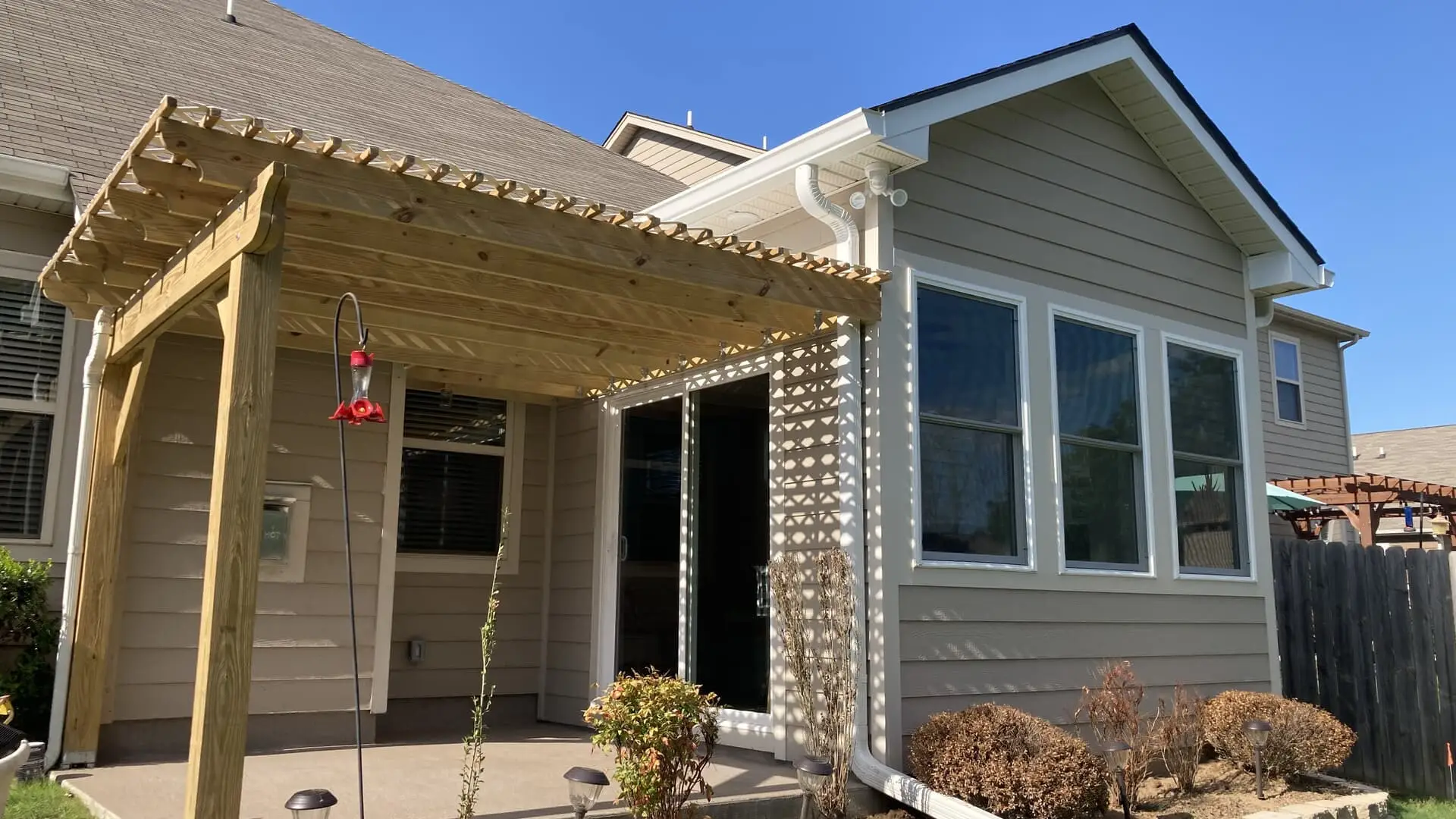
Middle Tennessee is hot and wet. NOAA’s 1991-2020 normals for Nashville International Airport put the July average high near 91°F and yearly precipitation around 50 inches, with May the wettest month. Deck boards here spend summer baking in the sun and spring soaking up rain, and both materials have to handle that.
Winters swing too. The same NOAA normals show a January average high of about 49°F and a low of about 30°F, so water sitting in cracks or under debris freezes at night and thaws by afternoon.
For wood, the rain is the bigger issue. Bare wood takes on water, and a sealer is what slows that down. That’s why our maintenance advice for wood decks is to reseal every 2 to 3 years. Miss a couple of cycles in a place that gets about 50 inches of rain, and the boards show it.
For composite, the sun and the damp matter in a different way. Composite boards don’t get sealed, but pollen, leaves and grime collect on them during a wet May, and we tell homeowners to wash composite with soap and water. Shaded decks under big trees stay damp longer, so they need that wash more often than a deck in full sun.
October is the driest month on the NOAA chart for Nashville, which makes a dry fall stretch a sensible window to clean and reseal a wood deck.
Which decking materials does Nixon Renovations install?
We install four board types: pressure-treated pine, cedar, redwood and composite boards from Trex and TimberTech. Each one can work in Williamson County or Maury County. The right pick depends on your budget, how much upkeep you’ll do, how long you’ll stay in the house and how much shade the deck gets.
Pressure-treated pine
Pressure-treated pine is the budget wood option and the one most homeowners picture when they say “a wood deck.” We’d quote it for someone who wants the lowest upfront cost and doesn’t mind resealing on schedule.
Cedar
Cedar is the wood people ask for when they want a real wood look and feel underfoot. We get a lot of cedar questions from Franklin homeowners in particular. Like any wood deck, a cedar deck gets resealed every 2 to 3 years to keep water out, and we’ll show you how when the job is done.
Redwood
We install redwood for homeowners who ask for it. The care schedule matches other wood: clean it, then reseal every 2 to 3 years. We’ll go over availability and price at the consultation.
Composite (Trex and TimberTech)
Composite boards from Trex and TimberTech are the low-upkeep option. You don’t seal or stain them. You wash them with soap and water. They cost more upfront, which the Cost vs Value numbers below make clear, and most composite decks still sit on a wood frame. You can see more of our custom decks page for design ideas in both materials.
How much more does composite decking cost than wood?
Nationally, composite costs about $6,833 more for the same deck. The Cost vs Value 2025 report from Zonda and the Journal of Light Construction prices a 16 by 20 foot wood deck addition at $18,263 and a composite deck addition at $25,096. Those are national averages, not Spring Hill quotes.
Simple math on the report’s 320 square foot deck puts the wood version at about $57 per square foot ($18,263 divided by 320) and the composite version at about $78 per square foot ($25,096 divided by 320). Your price will move with deck height, stairs, railing, the shape of the yard and the board line you choose.
The same report tracks resale value. The wood deck addition has a resale value of $17,323, or 95% of cost recouped. The composite deck addition has a resale value of $22,199, or 89% recouped. Subtract resale from cost and the wood deck’s net cost is about $940, while composite’s is about $2,897 (our arithmetic from the report’s figures).
So on paper, wood wins on upfront cost and percent recouped, and composite wins on hours spent with a can of sealer.
Angi’s Spring Hill, TN page lists an average of $7,752 for deck or porch build and replace jobs on its platform, but those jobs skew small. For a deeper look at pricing, read our post on how much a deck costs in Williamson County, and if resale is your main concern, see whether a deck adds value to a Franklin home.
How much maintenance does a wood deck need compared to composite?
A wood deck needs cleaning and resealing every 2 to 3 years. A composite deck needs washing with soap and water. That’s the advice we give every customer in the simple maintenance guide we hand over at the final walkthrough, and it’s the biggest day-to-day difference between the two materials.
If you hire the work out, HomeAdvisor’s porch cost guide lists resealing a wood porch at $0.75 to $4 per square foot and pressure washing at $0.10 to $0.50 per square foot. Those figures are for porches, but the work on a wood deck surface is similar.
Here’s what that looks like on the 320 square foot deck from the Cost vs Value report. Resealing would run about $240 to $1,280 per visit, and pressure washing about $32 to $160. Over 10 years, resealing every 2 to 3 years means roughly 3 to 5 reseals, or about $720 to $6,400 in sealing alone if you pay someone each time (our arithmetic from HomeAdvisor’s ranges).
Composite still needs attention. Leaves and pollen collect in corners and between boards, and a shaded deck in Thompsons Station or Spring Hill will grow grime faster than one in full sun. Soap, water and a soft brush handle it. Keep gaps between boards clear so rain can drain through.
Either way, check the deck once a year. NADRA, the North American Deck and Railing Association, recommends a yearly check and runs Deck Safety Month every May with a free 10-point “Check Your Deck” checklist. May is also our wettest month, which makes it a good time to look for soft spots and loose railings.
Does the framing under a composite deck matter?
Yes, and it matters as much for composite as for wood. Most composite decks sit on a wood frame, so posts, beams, joists and the ledger board face the same Middle Tennessee rain either way. Composite boards on a poorly built frame won’t save the deck. Framing quality decides how long both materials hold up.
Local codes spell out a lot of the frame. The City of Franklin’s deck construction handout requires footings at least 16 by 16 inches with at least 8 inches of concrete under the posts, pier holes dug to undisturbed soil, and a city inspection of those holes before concrete goes in.
Franklin’s handout also says a deck can’t be fastened to brick veneer. It has to attach to the structural parts of the house. The City of Spring Hill’s deck permit checklist asks for joist size and spacing, post and beam sizes, post-to-footing connections and ledger attachment with flashing on the construction drawings.
Water running behind an unflashed ledger board rots the house wall under composite boards just as easily as under wood. NADRA also notes that some older decks are attached with nails only instead of today’s lateral tension hardware.
Nixon handles permits, inspections and approvals, and every deck we build meets Tennessee state and local codes. Our post on deck permits in Franklin, Spring Hill and Columbia covers the paperwork for each city.
“John, rebuilt our old worn out deck. The design, craftsmanship, and materials used were excellent.”
Thomas Smith, Google review
Composite vs wood decking in Tennessee: side-by-side comparison
The table below puts the four materials we install next to each other, using the Cost vs Value 2025 national numbers and our own care advice. The report prices wood decks as one group, so cedar and redwood don’t get their own national figure. We price those species at the consultation.
| Factor | Pressure-treated pine | Cedar | Redwood | Composite (Trex, TimberTech) |
|---|---|---|---|---|
| National cost, 16 x 20 ft deck (Cost vs Value 2025) | $18,263 for a wood deck addition (about $57 per sq ft) | $25,096 (about $78 per sq ft) | ||
| Cost recouped at resale | 95% ($17,323) | 89% ($22,199) | ||
| Routine care (Nixon advice) | Reseal every 2 to 3 years | Reseal every 2 to 3 years | Reseal every 2 to 3 years | Wash with soap and water |
| Hired resealing (HomeAdvisor porch figure) | $0.75 to $4 per sq ft | $0.75 to $4 per sq ft | $0.75 to $4 per sq ft | Not needed |
| Framing underneath | Wood frame | Wood frame | Wood frame | Usually a wood frame |
| Best fit | Lowest upfront budget, owner who will reseal | Owner who wants real wood and will reseal | Owner who wants redwood specifically | Owner staying long term who wants less upkeep |
How do I choose the best decking material for Tennessee humidity?
Start with four questions: how long you’ll stay in the house, how much shade the deck gets, who uses it day to day, and what your budget is. With about 50 inches of rain a year, every material here needs care. The choice comes down to which kind of care fits your life.
How long will you stay in the house?
If you’re selling in a few years, wood makes a strong case. Cost vs Value 2025 shows a wood deck addition recouping 95% of its cost against 89% for composite, and you’ll only reseal once or twice before you move. If you plan to stay ten years or more, add up the resealing visits. That’s when composite’s higher upfront price starts to look different.
How much shade does the deck get?
A deck under mature trees in Franklin or Belle Meade dries slowly after rain and collects leaves and pollen. Wood in that spot needs its sealer kept up on time. Composite in that spot needs more frequent washing. A deck in full sun dries fast after storms but takes the full force of those 91°F July afternoons, so ask us about board color and how warm it gets underfoot.
Do you have kids or pets?
Kids and dogs mean more traffic, more spills and more time on the boards. A wood deck that falls behind on sealing can get rough, so families who won’t keep up the schedule often go composite. Families who like the feel of wood go cedar and plan the reseal into their spring or fall chores. Railing height and spindle spacing follow code either way: Franklin requires guards where a deck is more than 30 inches above grade, and a 4-inch sphere can’t pass between spindles.
What’s your budget?
If the budget is firm, pressure-treated pine gets you the most deck for the money, and you can upgrade railings or add stairs instead of paying the composite premium. If you’d rather pay more now and less later, composite shifts the spending upfront. We’ll price both on the same layout so you can compare real numbers for your yard.
Want both materials priced on the same plan? Request a free estimate or call 931-616-1524. We do an in-home consultation and measurements, then give you a detailed written quote. Browse finished decks in our project gallery or read about our deck installation process first.
Is a cedar deck a good choice in Franklin, TN?
A cedar deck in Franklin works well for homeowners who want real wood and will reseal it every 2 to 3 years. We install cedar regularly in Williamson County. The upkeep is the main commitment, and Franklin’s deck rules apply the same way whether the boards are cedar, pine or composite.
Franklin requires a building permit before any work starts, plus a plot plan showing the deck on the lot. Decks with roofs must meet setback rules. Guardrails are required where the deck is more than 30 inches above finished grade and must be at least 36 inches tall.
Spring Hill’s checklist shows something different: guards not less than 42 inches high where the deck or stairs sit more than 30 inches above grade. That’s a real local difference, and it’s one reason we check the rules for each address. Columbia permits go through City of Columbia Development Services, and unincorporated Maury County follows the 2018 International Codes.
If you’re in Franklin, our Franklin deck builder page covers that area, and Maury County homeowners can start at our Columbia, TN page.
“One of the best deck builders I have seen – really solid construction and better than most other deck contractors I have had seen. Great warranty, customer service and cares about quality and the details.”
Brian Nelson, Google review
What if I already have an old wood deck?
An old wood deck doesn’t always need to come out. If the frame is sound, new boards and railings may be enough, and that’s when the composite vs wood question comes back. If the frame is failing, we’d rebuild it to current code before choosing boards. We’ll tell you which at the inspection.
NADRA estimates 40 million residential decks in the US are more than 20 to 30 years old. Many decks in older neighborhoods around Franklin and Nashville fit that description. NADRA recommends an ASHI-certified home inspector or a knowledgeable deck builder for inspecting older decks.
Our deck repair work covers board replacement, refinishing and railing upgrades. Read repair or replace an old deck for the signs we look for, or see the full list of our services.
Get composite and wood priced side by side
Nixon Renovations has built decks since 2002 in Williamson, Maury and Davidson counties. Free estimates come with a detailed written quote for pressure-treated pine, cedar, redwood or Trex and TimberTech composite.
Request a free estimate
Call 931-616-1524
Frequently asked questions
Is composite or wood decking better for Tennessee humidity?
Both work in Middle Tennessee if the framing is built right and the boards get the care they need. Wood needs resealing every 2 to 3 years to keep out water from roughly 50 inches of yearly rain. Composite from Trex or TimberTech skips sealing and gets washed with soap and water instead.
How much more does a composite deck cost than a wood deck?
The Cost vs Value 2025 report prices a 16 by 20 foot wood deck addition at $18,263 and a composite deck addition at $25,096, a national gap of about $6,833. Your quote depends on deck height, stairs, railings, yard shape and the board line you pick.
Which deck material recoups more at resale?
Nationally, wood recoups more as a percentage. Cost vs Value 2025 lists a wood deck addition at 95% recouped ($17,323 resale value) and a composite deck addition at 89% recouped ($22,199 resale value). Composite has the higher dollar resale value but also the higher upfront cost.
How often should I reseal a wood deck in Middle Tennessee?
Our advice is to reseal a wood deck every 2 to 3 years. HomeAdvisor lists resealing a wood porch at $0.75 to $4 per square foot if you hire it out. A dry fall stretch works well, since October is the driest month on NOAA’s Nashville normals.
Does a composite deck still have a wood frame?
Usually, yes. Most composite decks sit on wood posts, beams and joists, so the frame faces the same rain as any wood deck. That’s why footing size, ledger flashing and attachment to the house matter for composite just as much. We build every frame to Tennessee state and local codes.
Which decking brands does Nixon Renovations install?
For composite, we install boards from Trex and TimberTech. For wood, we install pressure-treated pine, cedar and redwood. We can price more than one material on the same layout during your free consultation, so you can compare the real numbers for your yard before you decide.
Do I need a permit to replace deck boards or build a new deck?
For a new deck in Franklin, yes: a building permit and a plot plan are required before work starts. Spring Hill asks for a plot plan and construction drawings. Nixon handles permits, inspections and approvals, and we’ll confirm what your specific project needs at the consultation.
Sources
- Cost vs Value Report 2025, Zonda / Journal of Light Construction
- HomeAdvisor, cost to build a porch (resealing and pressure washing figures)
- Angi, deck or porch build or replace costs in Spring Hill, TN
- City of Franklin, TN, Building and Neighborhood Services, Deck Construction handout
- City of Spring Hill, TN, Deck Permit Construction Checklist
- North American Deck and Railing Association (NADRA)
- NOAA 1991-2020 climate normals, Nashville International Airport
