
Does a deck add value to a home in Franklin, TN? What the resale numbers say
By Nixon Renovations LLC · Spring Hill, TN · Updated October 31, 2026
Yes, a deck adds value to a home, but it rarely pays back every dollar. The Cost vs Value 2025 report puts a 16 by 20 foot wood deck at 95% of its cost recouped at resale and a composite deck at 89%. In Franklin, what moves an appraisal and a buyer is a permitted, inspected deck that fits the house and the street, with records to prove it.
We’ve built decks around Franklin, Spring Hill and the rest of Williamson County since 2002, and the resale question comes up in almost every consultation. Below are the national numbers, what they leave out, and what buyers and home inspectors in Middle Tennessee check. If you’re weighing a full backyard renovation in Franklin, TN, the same logic applies to patios, porches and fences.
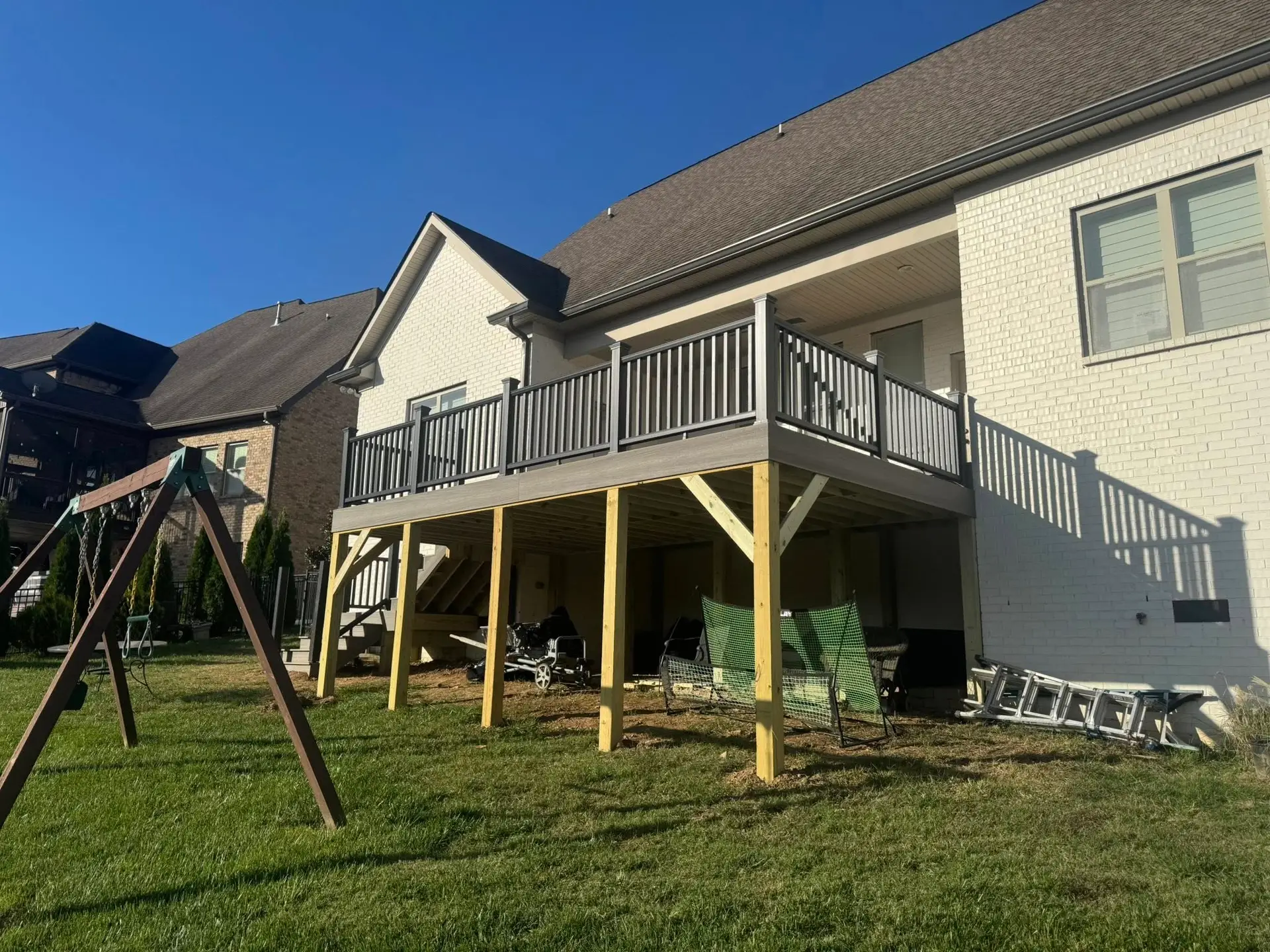
What does the Cost vs Value 2025 report say about deck ROI?
The Cost vs Value 2025 report from Zonda and the Journal of Light Construction lists a wood deck addition at a national average job cost of $18,263 with $17,323 added to resale value, or 95% recouped. A composite deck addition costs $25,096 on average and adds $22,199, or 89% recouped.
Both numbers describe the same project: a 16 by 20 foot deck, which is 320 square feet. That size matters, because a lot of Franklin decks are bigger and plenty of townhome decks are smaller. Here’s the report’s data side by side, with some simple arithmetic we added so you can compare per square foot.
| Cost vs Value 2025 (national) | Wood deck addition | Composite deck addition |
|---|---|---|
| Average job cost | $18,263 | $25,096 |
| Resale value added | $17,323 | $22,199 |
| Cost recouped | 95% | 89% |
| Job cost per sq ft (our math, 320 sq ft) | about $57 | about $78 |
| Value added per sq ft (our math) | about $54 | about $69 |
| Cost not recovered at sale (our math) | $940 | $2,897 |
Those are national averages. They aren’t a quote for your yard, and they aren’t what a Franklin appraiser will write down. For local pricing factors, our guide on how much a deck costs in Williamson County covers size, height, material and site work.
Recouped percentage or dollars added: which number matters?
It depends on your goal. The recouped percentage tells you how much of your spending comes back. The dollar figure tells you how much the house is worth afterward. Wood wins on percentage, 95% against 89%. Composite wins on dollars, adding $22,199 against $17,323, a gap of $4,876 in the report’s estimate.
Here’s how we explain it on the phone. If you’re selling soon and want to spend as little as possible for the most return, wood’s higher percentage looks better. You’d spend $18,263 and lose about $940 of it at sale, by the report’s numbers. Composite costs $6,833 more up front and leaves about $2,897 unrecovered, but the house carries more added value when it lists.
If you’re staying for years, neither number tells the whole story. You’ll use the deck every spring and fall, and the maintenance on each material is different. Wood needs resealing every 2 to 3 years. Composite needs a wash with soap and water. Our breakdown of composite vs wood decking in Middle Tennessee goes deeper on that trade.
Why national deck ROI numbers aren’t a Franklin appraisal
Cost vs Value is a survey-based national estimate of one standard project. An appraiser in Franklin or Spring Hill looks at your house, recent sales of comparable homes nearby, and whether the deck is legal and in good shape. Two decks with the same price tag can land very differently on an appraisal.
A few things move the local number. Comparable sales in your subdivision set the ceiling. If every house on your street has a 12 by 14 deck and yours has a 600 square foot multi-level build, the appraiser may not credit all of it. Condition counts. A deck with soft boards or loose railings can turn into a repair line on an inspection report instead of an asset. And permit status counts, because an unpermitted deck can create questions at closing.
The Angi cost page for Spring Hill lists an average of $7,752 and a typical range of $4,500 to $8,775 for deck or porch build and replace jobs requested through its platform. Those jobs skew small, so don’t read that figure as the price of a new 320 square foot deck.
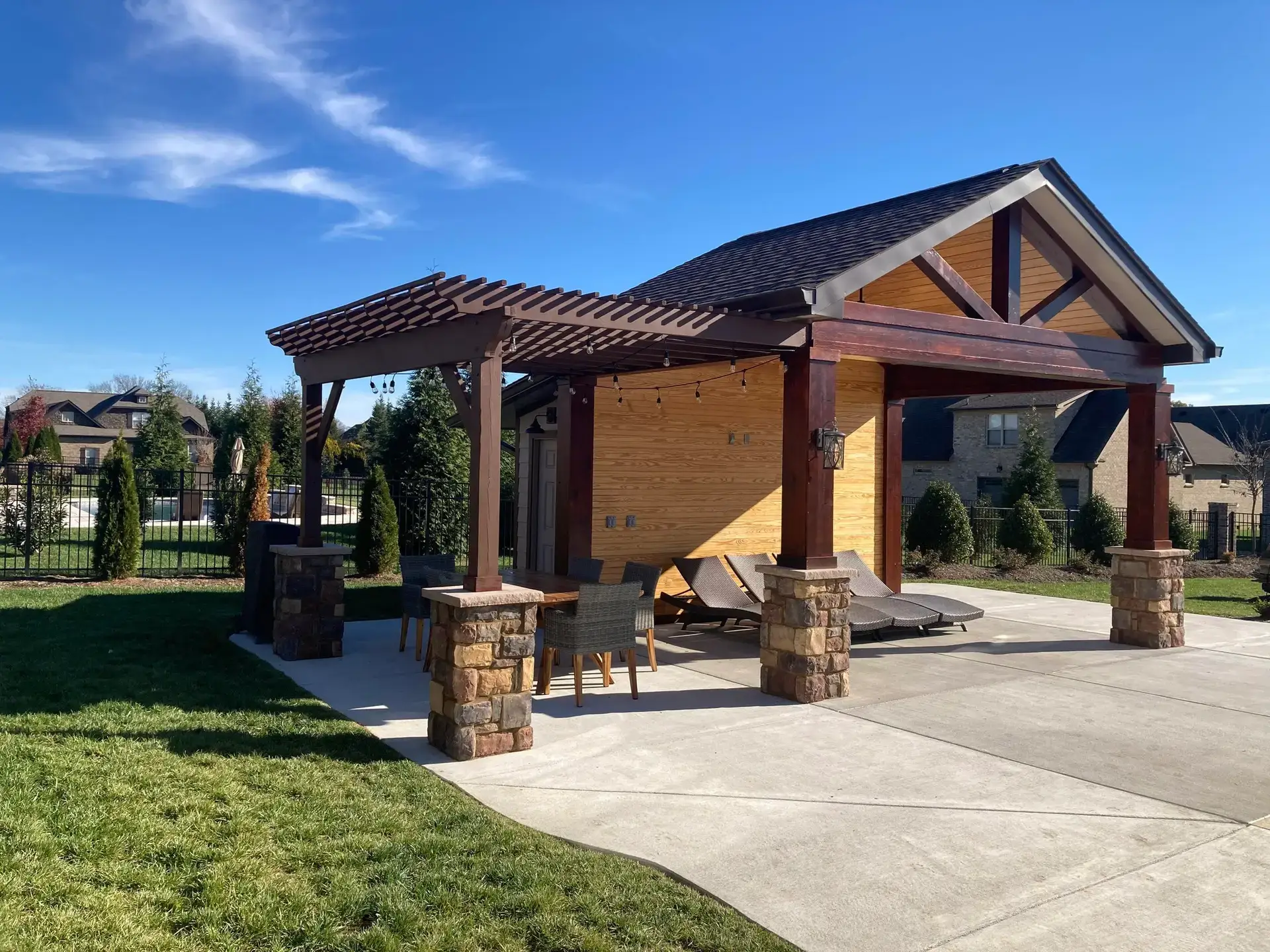
What do buyers and home inspectors look at on a deck?
Buyers notice size, layout and how the deck connects to the kitchen. Home inspectors check how it’s built and attached. In Franklin, the questions usually come back to the city’s Deck Construction handout: permit status, guard height, stair dimensions, footings and how the ledger is fastened to the house.
Permits and finalized inspections
The City of Franklin’s handout says a building permit is required before any work starts, with a plot plan showing where the deck sits on the lot. The city also inspects pier holes before concrete goes in. When the permit is closed out with passed inspections, you have paperwork a buyer’s agent can see. An open or missing permit is the kind of thing that delays a closing. We handle permits, inspections and approvals on every deck we build, and our post on deck permits in Franklin, Spring Hill and Columbia lists what each office asks for.
Ledger attachment
Franklin’s handout is direct on this: a deck can’t be fastened to brick veneer. It has to attach to the structural parts of the house. Plenty of Williamson County homes have brick, so inspectors check this early. NADRA, the North American Deck and Railing Association, notes that some older decks are attached with nails only instead of today’s lateral tension hardware. If your deck was built that way, expect it to show up on a report.
Guards, stairs and handrails
Under the Franklin handout, guardrails are required where the deck sits more than 30 inches above finished grade, at least 36 inches tall, and a 4-inch sphere must not pass between spindles. Stairs need a rise of no more than 7 3/4 inches, treads of at least 10 inches, and uniform steps. A graspable handrail 34 to 38 inches above the nosing is required with more than 3 risers.
Spring Hill’s Deck Permit Construction Checklist shows a 42-inch guard in its detail, compared with Franklin’s 36 inches. That’s a real local difference, and it’s one reason a deck that passed in one town can draw a comment from an inspector who’s used to another town’s rules.
Footings
Franklin calls for footings at least 16 by 16 inches with at least 8 inches of concrete under the posts, dug to undisturbed soil. An inspector can’t see footings once they’re buried, which is exactly why a finalized permit with a passed pier inspection carries weight with buyers.
Thinking about a deck before you list, or one you’ll enjoy for years first? We’ll walk the yard with you, measure, and give you a detailed written quote at no cost. Start with our backyard renovation service, look at past work in the project gallery, or request a free estimate online.
Which deck features help resale, and when is it over-building?
Features that make the deck easy to use and easy to maintain tend to help. Features that push the project far past what your neighborhood supports usually don’t come back at sale. The test is simple: would a buyer shopping your price range expect it, and would an appraiser find comparable homes that have it?
Things we see buyers respond to in Franklin and Spring Hill: a direct path from the kitchen door, stairs that land somewhere useful in the yard, solid railings, and room for a table and grill. A 16 by 20 deck, the report’s size, holds a dining set and a grill with space to walk around them. Low-maintenance boards matter more to some buyers than others, which is part of why composite adds more dollars in the report.
Over-building looks like a deck that costs more than the neighborhood can carry. A multi-level deck with built-in lighting makes sense if you’ll use it for a decade. Selling in eighteen months in a starter-home subdivision, the appraiser won’t find comparables to back up the spend. Spring Hill’s checklist also says engineering is required when a hot tub or swim spa will sit on the deck. That’s extra design cost to plan for, and it only pays off if you’ll use the tub.
Our custom decks start from how you’ll use the space, then we scale the design to the house. For a straightforward build, our deck installation page covers the standard process.
Deck, screened porch or patio: which backyard renovation adds the most?
There’s no single winner. The Cost vs Value 2025 deck figures are the only resale numbers in our sources, so we can’t give you a recouped percentage for a screened porch or paver patio. What we can tell you is how each one works in a Franklin backyard renovation and what it costs to build.
A deck is the usual choice when the back door sits above grade. A brick paver patio works on flat lots where the door is close to the ground, and there are no guardrails or ledger questions to answer at inspection. A screened porch adds a roof and screens, which buyers in Middle Tennessee like because July highs at Nashville International Airport average about 91°F and the area gets roughly 50 inches of rain a year.
HomeAdvisor puts screening an existing porch at $5 to $20 per square foot and building a new screened porch at $25 to $120 per square foot. A covered porch runs $40 to $120 per square foot, or about $8,000 to $24,000 for 200 square feet. Franklin’s handout adds that decks with roofs must meet setback rules, so a roof can change what fits on your lot.
| Option | Cost data we have | Franklin notes |
|---|---|---|
| Open deck | Cost vs Value 2025: $18,263 wood, $25,096 composite (320 sq ft, national) | Permit, plot plan, pier hole inspection, ledger to structure |
| Screened porch | HomeAdvisor: $25 to $120 per sq ft new, $5 to $20 per sq ft to screen existing | Roofed structures must meet setback rules |
| Covered porch | HomeAdvisor: $40 to $120 per sq ft, about $8,000 to $24,000 for 200 sq ft | Roofed structures must meet setback rules |
| Brick paver patio | No figure in our sources; depends on size, base prep and slope | Ground level, no guardrails needed |
We build all of these. See porch installation for open, covered and screened porches, and read screened porch vs covered porch vs open deck for a closer comparison. Many of our backyard renovation projects combine two, such as a deck stepping down to a paver patio.
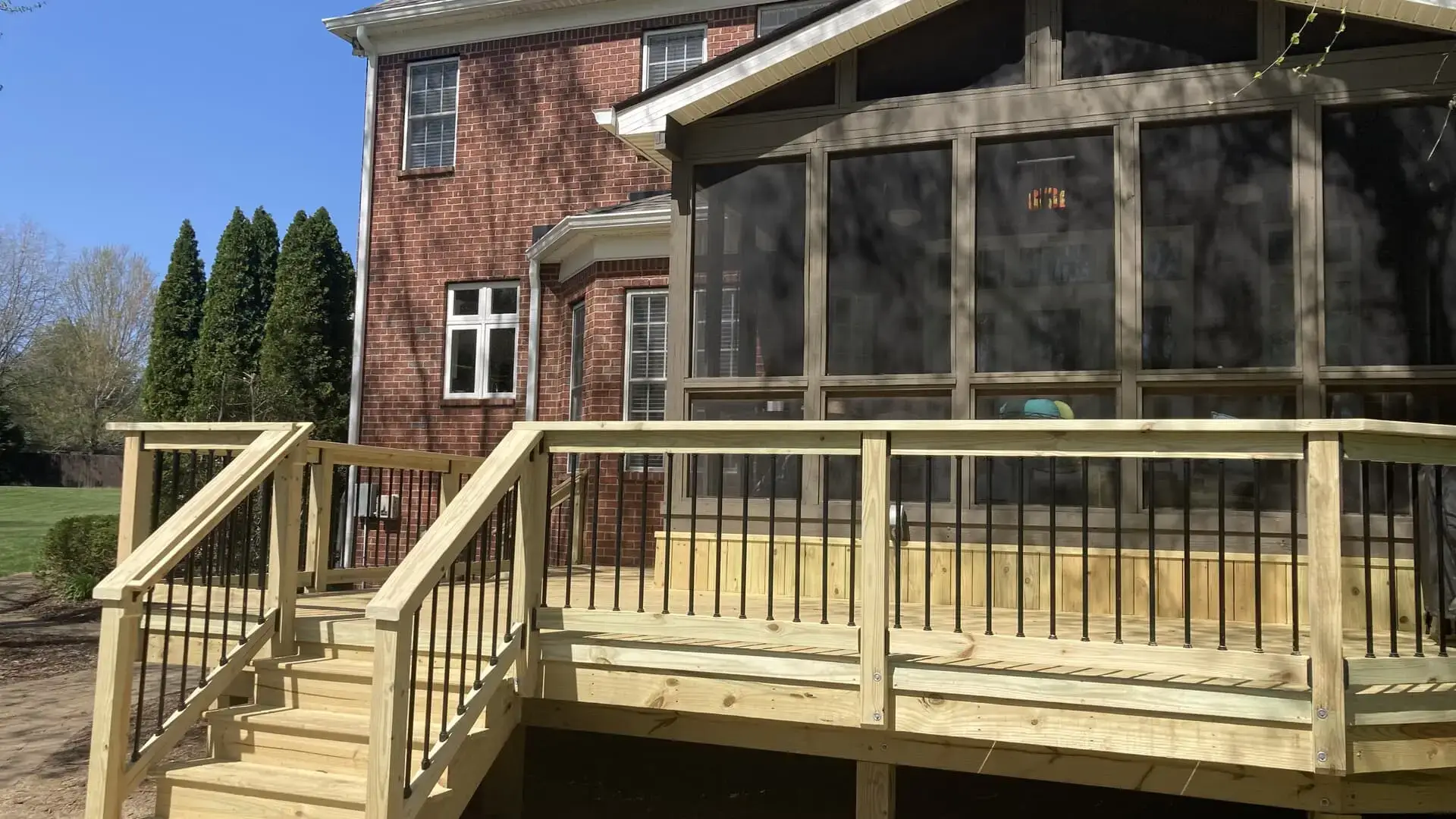
Do maintenance records affect outdoor living space resale value?
Yes. A folder with the permit, final inspection, material receipts and dates of resealing or washing answers questions before a buyer’s inspector asks them. It shows the deck was built to code and cared for, which is harder to argue with than a seller saying “it’s in great shape.”
Every homeowner we build for gets a simple maintenance guide at the final walkthrough. Follow it and write down what you did. For wood, that means resealing every 2 to 3 years. For composite, it means washing with soap and water. If you hire someone for pressure washing or resealing, keep the invoice. HomeAdvisor lists resealing a wood porch at $0.75 to $4 per square foot and pressure washing at $0.10 to $0.50 per square foot, so these are small costs to document.
NADRA recommends checking a deck every year and estimates 40 million US decks are more than 20 to 30 years old. May is its Deck Safety Month, with a free 10-point “Check Your Deck” checklist. If the deck is older and you’re unsure, NADRA suggests an ASHI-certified home inspector or a knowledgeable deck builder look at it. Our guide to whether you should repair or replace an old deck covers what we look for.
Should you build a deck right before listing your home?
Usually only if the yard has nothing usable or the old deck would fail inspection. A new deck built right before sale returns 89% to 95% of its cost at best by the national numbers. A deck you build years ahead of selling gives you seasons of use first, and that use is the part no resale report measures.
If you’re listing within a few months, start with the old deck. Replacing worn boards, refinishing and upgrading railings can fix the items most likely to show up on a buyer’s inspection report for less than a full rebuild. We do deck repair and restoration for exactly this. If the ledger is nailed to brick veneer or the footings are failing, though, a repair may not get you a clean report.
If you’re building new to sell, leave time. Most of our decks take one to two weeks to build, and up to three weeks for larger designs, but the permit has to come first in Franklin. Bill Sherry described that part of the process in his review: “John walked me through the timeline of the project and informed me of process suchs as premitting, workforce availability, and material availability.” Get the permit closed before photos go online.
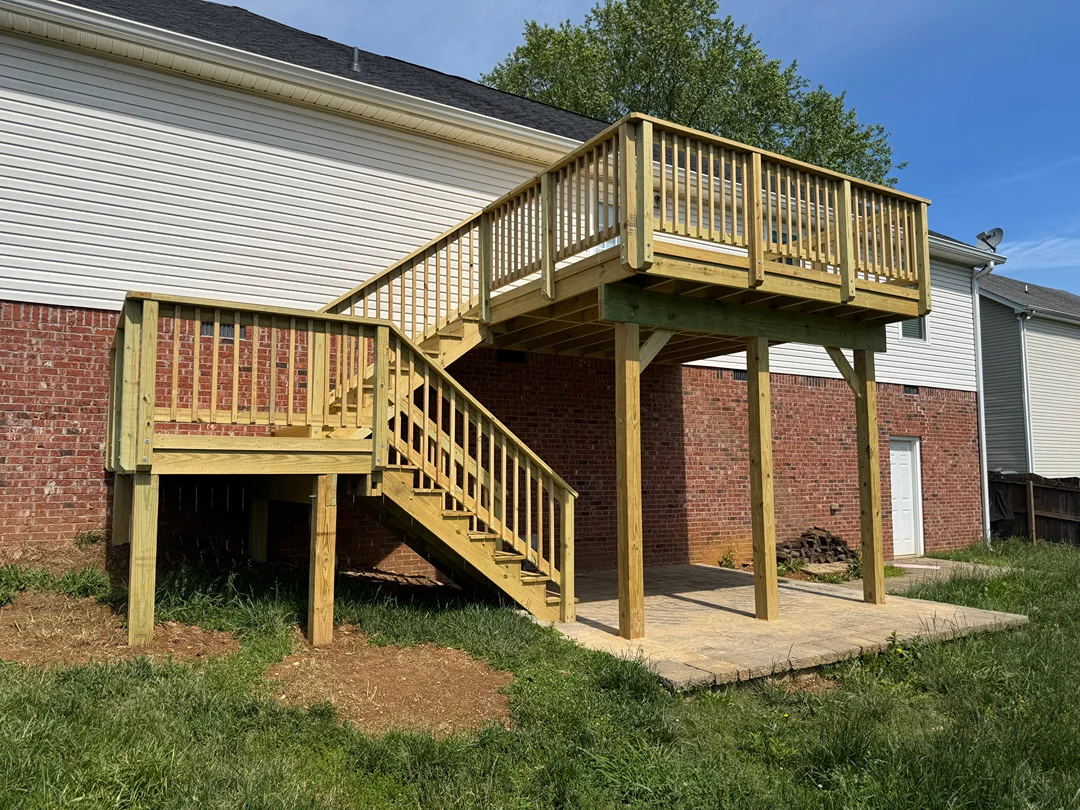
What homeowners say about our deck work
Build quality holds value over time, and it’s what our customers comment on in reviews. Brian Nelson’s Google review talks about solid construction and care with details, the same things a buyer’s home inspector checks on a deck before closing.
“One of the best deck builders I have seen – really solid construction and better than most other deck contractors I have had seen. Great warranty, customer service and cares about quality and the details.”
Brian Nelson, Google review
We’re licensed and insured in Tennessee, and every deck we build meets Tennessee state and local codes. Our process runs from an in-home consultation and measurements, through design and planning and construction, to a final walkthrough with care guidance. You can read more about Nixon Renovations or see our Franklin deck builder page for the neighborhoods we work in.
Plan a deck that adds value to your Franklin home
Nixon Renovations has built decks and outdoor spaces since 2002 across Williamson, Maury and Davidson counties. Free estimates come with a detailed written quote, and we handle the permit so your deck has the paperwork buyers ask for.
Request a free estimate
Call 931-616-1524
Frequently asked questions
Does a deck add value to a home in Franklin, TN?
Yes, though it rarely returns every dollar spent. Cost vs Value 2025 puts a 16 by 20 foot wood deck at 95% recouped and composite at 89% nationally. A Franklin appraisal also weighs comparable sales, condition and permit status, so a permitted, well-kept deck sized for the neighborhood holds value best.
What is the deck ROI in Tennessee?
The Cost vs Value 2025 report gives national figures, not Tennessee ones. A wood deck addition averaged $18,263 in cost and $17,323 in added value. A composite deck averaged $25,096 in cost and $22,199 in value. Local results depend on your home, your neighborhood and the deck’s condition and permits.
Does composite or wood add more resale value?
Composite adds more dollars and wood recoups a higher percentage. In Cost vs Value 2025, composite added $22,199 against $17,323 for wood, but wood recouped 95% of its cost against 89%. If you plan to stay for years, maintenance matters too: wood needs resealing every 2 to 3 years.
Will an unpermitted deck hurt my home sale?
It can. The City of Franklin requires a building permit before deck work starts and inspects pier holes before concrete goes in. Without a closed permit, a buyer has no record of buried footings or other inspected work, and that can raise questions at closing. We pull and close permits on every deck we build.
What do home inspectors check on a deck?
They look at how the deck is attached to the house, guard height and spacing, stair dimensions and overall condition. Franklin’s handout says a deck can’t attach to brick veneer and needs 36-inch guards above 30 inches of height. NADRA notes some older decks are fastened with nails only instead of lateral tension hardware.
Should I build a new deck right before selling?
Only if the yard has no usable outdoor space or the old deck would fail inspection. National data shows 89% to 95% of cost recouped at best. Repairs such as board replacement, refinishing and railing upgrades often fix inspection items for less. Building years ahead gives you the use before you sell.
Is a screened porch better for resale than a deck?
Our sources only have resale figures for decks, so we can’t give a screened porch return percentage. HomeAdvisor puts a new screened porch at $25 to $120 per square foot. The roof shades the space in Middle Tennessee summers, but Franklin’s setback rules for roofed decks can limit what fits on your lot.
Sources
- Zonda and Journal of Light Construction, Cost vs Value 2025
- City of Franklin, TN, Building and Neighborhood Services, Deck Construction handout
- City of Spring Hill, TN, Deck Permit Construction Checklist
- HomeAdvisor, screened porch cost
- HomeAdvisor, porch cost
- Angi, Spring Hill, TN deck or porch cost page
- North American Deck and Railing Association (NADRA)
- NOAA 1991 to 2020 climate normals, Nashville International Airport
